Custom Cosmetic Packaging Manufacturer in China
Source custom cosmetic packaging in China with bottles, jars, tubes, pumps, flexible MOQs, decoration, testing guidance, and custom mold support.
Choosing a custom cosmetic packaging manufacturer in China is not simply a price comparison. The right supplier must translate a brand brief into a manufacturable bottle, jar, tube, pump, closure, decoration, and shipping configuration that works with the formula and filling line.
Quick answer: Select a China cosmetic packaging manufacturer by confirming its product range, materials, component-matching process, customization capability, sampling workflow, quality controls, tooling support, MOQ, and export communication. Provide the actual formula category and filling requirements early, then approve production only after testing representative samples of the complete packaging system.
What Is a Custom Cosmetic Packaging Manufacturer?
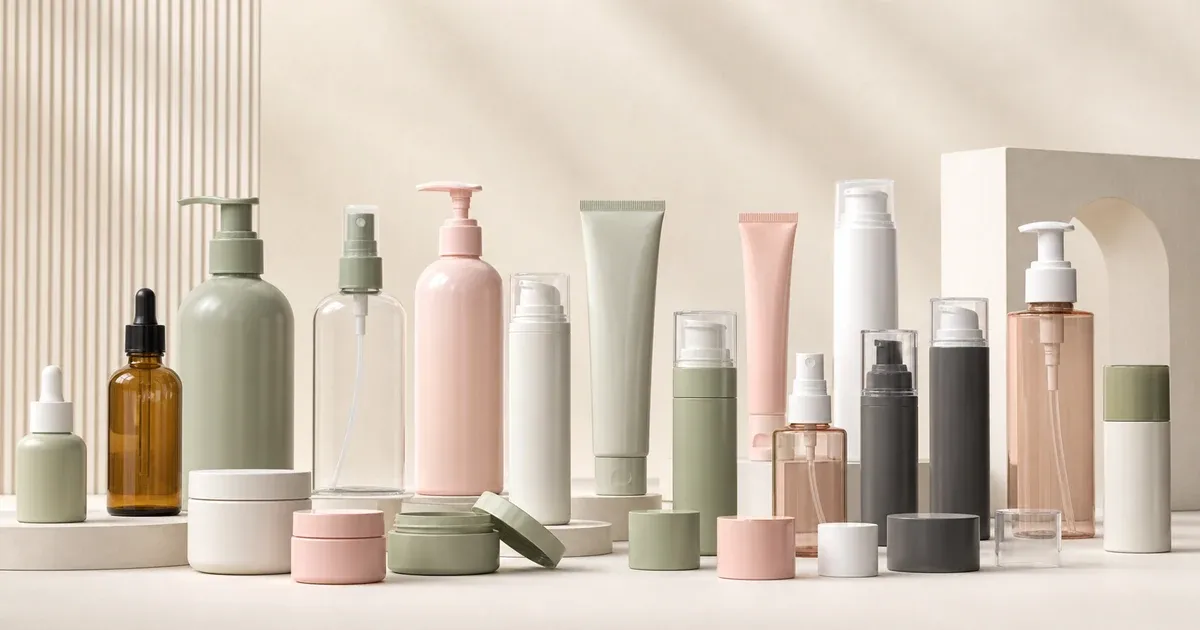
A custom cosmetic packaging manufacturer or supplier develops primary and secondary packaging for beauty and personal-care products. Typical components include plastic bottles, airless bottles, lotion bottles, dropper bottles, cream jars, cosmetic tubes, pumps, caps, closures, and paper boxes.
The packaging supplier is not necessarily the factory that formulates or fills the cosmetic product. Beauty brands and skincare startups often coordinate three parties: the brand owner, the formula or filling factory, and the packaging supplier. Clear responsibility between these parties prevents errors in neck finish, pump output, fill volume, sealing, labeling, and production timing.
AC Packaging is positioned as a China-based custom packaging supplier for skincare, cosmetic, and personal-care brands. Its project scope includes packaging selection, component matching, custom color, decoration, and custom mold development. Formula manufacture and regulatory responsibility should remain with the appropriately qualified brand, responsible person, contract manufacturer, filler, or laboratory.
Why Beauty Brands Source Cosmetic Packaging from China
China has a broad packaging supply chain that covers molding, tube production, pumps, closures, decoration, tooling, assembly, and export packing. This breadth can help buyers combine multiple formats within one coordinated packaging program.
The commercial advantage is not only unit cost. A capable supplier can help a buyer compare existing molds before investing in new tooling, coordinate bottle and pump combinations, consolidate decoration, and plan packaging across several SKUs. These services are especially valuable for startups and contract fillers that do not have an internal packaging engineer.
China sourcing also requires disciplined specifications. Time-zone differences, sample shipping, component subcontracting, color interpretation, and long-distance freight can magnify small misunderstandings. Buyers should rely on drawings, signed samples, bills of materials, test plans, and written acceptance criteria rather than informal descriptions.
Packaging Formats Available from AC Packaging
| Packaging format | Common applications | Main sourcing checks |
|---|---|---|
| Plastic bottles | Toners, cleansers, shampoos, body care, oils | Resin, wall thickness, neck finish, closure fit, filling temperature |
| Airless bottles | Serums, creams, treatment products | Priming, evacuation, output, piston or pouch performance, formula compatibility |
| Lotion bottles | Face and body lotions, liquid soaps | Pump dose, dip-tube length, locking style, leakage and torque |
| Dropper bottles | Serums, oils and concentrates | Bulb and pipette compatibility, dose, wiper fit, leakage |
| Cream jars | Moisturizers, masks, balms | Jar-cap fit, liner, sealing surface, inner cup and outer jar materials |
| Cosmetic tubes | Cleansers, creams, gels and sunscreen | Layer structure, shoulder bond, cap, decoration and sealing process |
| Pumps, caps and closures | Dispensing and sealing systems | Neck dimensions, gasket or liner, torque, output and assembly |
| Paper boxes | Secondary packaging and retail presentation | Finished pack dimensions, board, insert, coating and artwork |
Materials Should Be Selected Around the Formula and Format
AC Packaging projects may use PET, PP, PE, HDPE, PETG, PMMA, and PCR plastic. Each material brings a different balance of clarity, stiffness, squeeze behavior, chemical resistance, weight, appearance, and processing method.
PET is widely used for clear or colored bottles. PP is common in jars, caps, pumps, airless components, and rigid molded parts. PE and HDPE are used for squeezable bottles, tubes, and chemical-resistant applications. PETG and PMMA may be selected where visual clarity or premium molded appearance is important. PCR plastic can support recycled-content goals but may introduce color, haze, odor, or lot variation that must be specified and tested.
A material name does not prove formula compatibility. Oils, alcohol, acids, surfactants, fragrances, pigments, and other ingredients can interact with the bottle, liner, elastomer, adhesive, coating, or printing. Final approval must depend on the real formula, complete packaging combination, filling process, storage conditions, and test results.
How to Evaluate a Cosmetic Packaging Manufacturer in China
1. Confirm the real product scope
Ask which items are standard molds, which components are sourced from partner factories, and which processes are completed in-house or externally. A coordinated supplier can still be effective, but the buyer needs a clear supply-chain map for quality ownership and lead-time planning.
2. Review component matching
Bottles, pumps, caps, liners, dip tubes, overcaps, and decorative shells must work as a system. Neck-finish names alone do not guarantee fit. Request drawings and assembled samples, then test torque, leakage, priming, output, re-priming, and transport performance.
3. Assess customization capability
AC Packaging customization options may include custom color, logo printing, silk-screen printing, hot stamping, spray coating, metallization, water-transfer printing, and custom injection color. Ask for decorated samples made with the intended substrate and process. Approve color and artwork with physical references, not only screen images.
4. Check the sampling and approval process
A reliable project normally moves from stock samples to custom color or decoration samples, filled compatibility tests, pre-production approval, and mass-production inspection. Keep signed reference samples and written tolerances for appearance, dimensions, function, and packing.
5. Evaluate communication quality
Good export communication is technical and specific. The supplier should identify open questions, confirm assumptions, record revisions, and avoid substituting components without approval. Buyers should nominate one owner for drawings, artwork, samples, testing, and purchase-order changes.
MOQ for Custom Cosmetic Packaging
AC Packaging's standard custom projects generally start at around 10,000 pieces, subject to the selected item, material, color, decoration, and component configuration. Some stock items or sample orders may follow different quantities. Custom molds, special pumps, multiple decoration passes, or bespoke materials can require different commercial terms.
For a startup, “low MOQ” should mean a practical minimum that matches the manufacturing process—not an unrealistically small quantity for every custom feature. Buyers can reduce launch risk by using an existing mold, limiting colors, choosing one decoration process, and standardizing a pump or closure across several SKUs.
When a Custom Mold Makes Sense
Custom mold development is appropriate when an existing package cannot deliver the required shape, capacity, brand identity, dispensing function, or component integration. It involves design review, manufacturability analysis, tooling cost, trials, corrections, and approval time.
Before starting tooling, define the product architecture, target material, nominal volume, fill level, neck and closure, decoration area, assembly method, carton dimensions, and annual forecast. Ownership, maintenance, service life, modification rights, and storage terms for the mold should be written into the commercial agreement.
A custom silhouette can improve differentiation, but it also creates a proprietary supply dependency. Compare the brand value of a new mold with the speed, lower risk, and replaceability of an existing mold plus custom color and decoration.
Compatibility and Performance Tests Before Production
The brand and filling factory should build a risk-based test plan using the actual formula and production-representative packaging. Tests may include:
- Formula and packaging compatibility under defined storage conditions
- Leakage, weight loss, swelling, paneling and stress cracking
- Pump priming, output, clogging, dripping and evacuation
- Closure torque, liner condition and seal integrity
- Decoration adhesion, abrasion and chemical resistance
- Drop, vibration, temperature cycling and transport simulation
- Filling-line trials, capping settings and induction-sealing trials
Test conditions and acceptance criteria should be agreed by the responsible technical parties. A packaging supplier can provide samples and specifications but should not invent compatibility conclusions without filled-pack test evidence.
Regulatory Responsibilities for International Beauty Brands
Packaging development should leave enough space for the legally required label information in each destination market. In the European Union, Regulation (EC) No 1223/2009 requires specified information on the cosmetic container and packaging and assigns obligations to the responsible person. Product notification is handled through the Cosmetic Products Notification Portal where applicable.
In the United States, the FDA explains facility-registration and product-listing requirements under the Modernization of Cosmetics Regulation Act of 2022. The FDA also states that registration and listing are not a cosmetic approval program or promotional certificate.
These rules relate to the finished cosmetic and the responsible businesses, not merely the empty packaging. Brands should obtain current regulatory advice and should not assume that purchasing a bottle or jar transfers finished-product compliance to the packaging supplier.
Pre-Order Checklist for Beauty Brands and Filling Factories
- Define the formula category, viscosity, fill volume and filling conditions.
- Select the packaging format and material.
- Confirm bottle, pump, closure, liner, dip tube and overcap specifications.
- Request drawings, samples and a component bill of materials.
- Approve physical color and appearance tolerances.
- Approve artwork, decoration position and adhesion criteria.
- Complete compatibility, dispensing, leakage and transport tests.
- Confirm MOQ, unit price, tooling, sample charges and payment terms.
- Confirm production lead time only after specifications are frozen.
- Approve packing, carton marks, palletization and shipping documents.
- Retain a signed mass-production reference sample.
How AC Packaging Supports Custom Projects
AC Packaging supports beauty brands, skincare startups, filling factories, contract manufacturers, distributors, and personal-care businesses sourcing packaging from China. Buyers can develop coordinated bottles, jars, tubes, pumps, caps, closures, paper boxes, and related beauty packaging within one project.
Projects can begin with existing packaging and custom decoration or progress to custom injection color and custom mold development. To receive a useful recommendation, provide the pack type, volume, formula category, material preference, decoration reference, target market, forecast quantity, and launch schedule.
Frequently Asked Questions
How do I find a reliable custom cosmetic packaging manufacturer in China?
Start with a detailed packaging brief and compare suppliers against the same requirements. Verify their real product scope, component-matching process, drawings, material documentation, sample quality, decoration capability, tooling support, inspection criteria, and export communication. Avoid choosing on unit price alone, because pump failures, leakage, color variation, or late component substitutions can cost more than the initial saving.
What packaging can AC Packaging customize?
AC Packaging works with plastic bottles, airless bottles, lotion bottles, dropper bottles, cream jars, cosmetic tubes, pumps, caps, closures, paper boxes, and beauty-related packaging. Customization may include color, printing, silk screen, hot stamping, coating, metallization, water-transfer printing, injection color, and custom mold development, subject to the selected item and technical feasibility.
What is the MOQ for custom cosmetic packaging?
Standard custom projects generally start around 10,000 pieces. The actual MOQ depends on the item, resin, color, decoration, pump or closure, and production method. Existing molds and simpler decoration can be more startup-friendly than a fully bespoke package. Request a quotation using a defined specification to receive an accurate minimum.
Can a skincare startup order packaging with a custom logo?
Yes, subject to the packaging format, decoration method, artwork, and MOQ. A startup can often begin with an existing bottle or jar mold and add a custom color, screen-printed logo, hot stamp, coating, or label. Production-representative decoration samples should be approved for color, position, adhesion, abrasion, and compatibility before mass production.
Does AC Packaging provide custom mold development?
Custom mold development is available for suitable projects. The process normally includes a design brief, drawings, manufacturability review, tooling quotation, mold trials, sample evaluation, and approval. Buyers should define mold ownership, maintenance, modification, storage, and acceptance terms before paying for tooling.
Can the packaging supplier guarantee compatibility with my formula?
No packaging should be approved from a general guarantee alone. The supplier can recommend materials and provide samples, but compatibility depends on the actual formula, components, decoration, filling process, storage conditions, and test protocol. The brand, filler, laboratory, and packaging supplier should agree on a project-specific test plan and written acceptance criteria.
How long does custom cosmetic packaging take?
Lead time varies with stock availability, custom color, decoration passes, pump sourcing, mold development, sampling, testing, approval speed, and order size. Ask for separate estimates for samples, tooling, mass production, and freight. Confirm the final production schedule only after specifications, artwork, colors, and signed samples are approved.
What information should I send for a quotation?
Send the packaging format, capacity, formula category, material, neck or dispensing requirement, color, decoration, destination market, order quantity, annual forecast, and target delivery date. Include reference images and filling-line constraints where available. A complete brief reduces quotation revisions and helps the supplier identify technical risks early.
Request a Custom Cosmetic Packaging Proposal
Contact AC Packaging with your product type, target format, fill volume, material preference, decoration concept, estimated quantity, and launch schedule. The team can recommend existing packaging options or evaluate a custom mold program for your beauty, skincare, or personal-care project.