How to Choose PCR Plastic Packaging for Skincare Products
A practical buyer's guide to selecting PCR plastic packaging for skincare, from material and compatibility to dispensing, claims, testing, MOQ, and production approval.
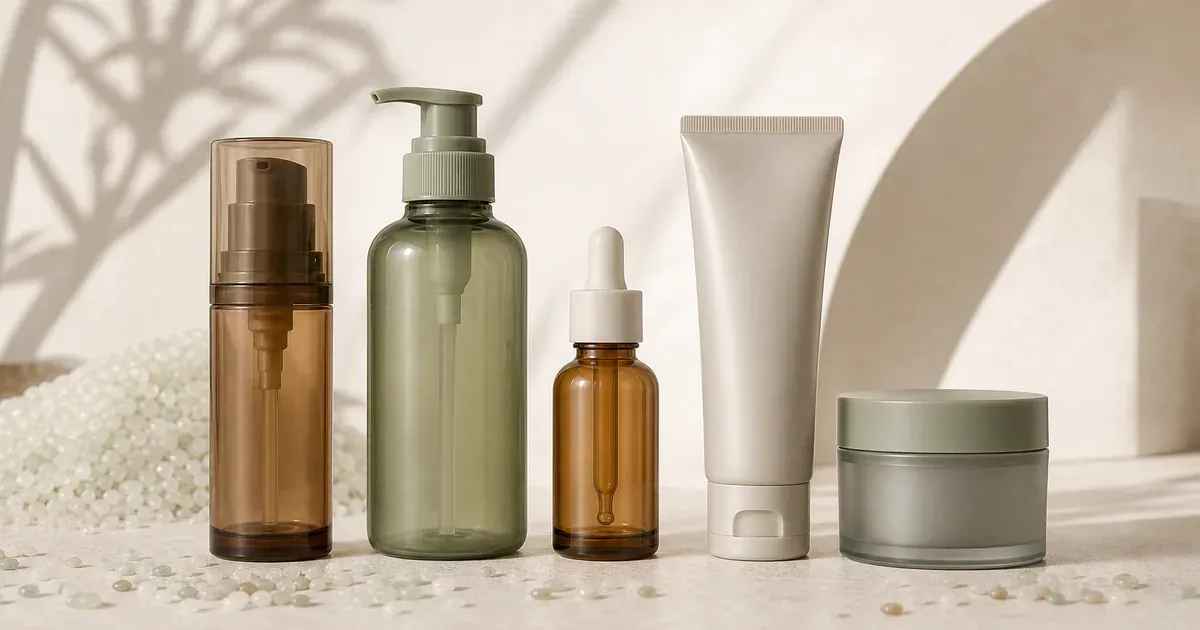
Post-consumer recycled plastic can reduce reliance on virgin resin, but choosing it for skincare packaging requires more than selecting a recycled-content percentage. Buyers must match the resin, container format, formula, dispensing system, decoration, quality tolerances, and market requirements before approving mass production.
Quick answer: Choose PCR skincare packaging by defining the formula, pack format, target recycled content, appearance tolerance, decoration, and destination markets first. Then evaluate material documentation, component fit, dispensing performance, compatibility, transport durability, and production consistency using representative samples. Final approval should always depend on testing the actual formula in the complete packaging system.
Why PCR Plastic Packaging Requires a Different Buying Process
PCR plastic is resin made partly or fully from plastic products that consumers have used and discarded, which are collected, sorted, cleaned, processed, and returned to manufacturing. It is different from post-industrial recycled material, which is recovered from manufacturing scrap before a product reaches the consumer.
For skincare brands, PCR can support packaging-reduction and recycled-content strategies. It can also introduce variables that are less pronounced with virgin resin. Resin color, clarity, odor, mechanical behavior, and lot-to-lot appearance can vary with the feedstock and recycling process. These characteristics do not automatically make the material unsuitable, but they must be included in the specification and approval process.
The European Union's Packaging and Packaging Waste Regulation, Regulation (EU) 2025/40, entered into force on 11 February 2025 and generally applies from 12 August 2026. It introduces requirements across the packaging life cycle, including recyclability and recycled-content provisions. Requirements differ by packaging category, material, timing, and possible exemptions. Brands should obtain market-specific legal advice rather than treating a general packaging article as a compliance determination.
Start with the Packaging Brief, Not the PCR Percentage
The best PCR percentage is the level that meets the project's sustainability objective while preserving the required packaging performance, appearance, supply consistency, and compliance documentation. A higher number is not automatically the better commercial choice.
Before requesting quotations, prepare a brief containing:
- Product type, viscosity, pH range, and sensitive ingredients
- Nominal fill volume and expected headspace
- Preferred format: bottle, jar, tube, dropper, or airless pack
- Target resin and recycled-content range
- Color, opacity, gloss, and acceptable visual variation
- Pump output, closure style, liner, or applicator requirements
- Filling method and line constraints
- Decoration and secondary-packaging requirements
- Destination countries and claim language
- Forecast volume, launch date, and replenishment plan
This brief gives the packaging supplier enough information to recommend a technically realistic starting point. It also makes quotations easier to compare because suppliers are responding to the same assumptions.
Compare PCR Materials by Function
PCR is not one universal material. PCR PET, PCR PP, and PCR PE retain the general characteristics of their resin families, but processing history and recycled feedstock can affect their final performance. The following comparison is a sourcing guide, not a substitute for a project-specific technical assessment.
| Material | Common skincare uses | Buyer considerations |
|---|---|---|
| PCR PET | Bottles for cleansers, toners, lotions, and oils | Good visual presentation and rigidity; recycled content may add tint, haze, or small visual variation. Confirm formula compatibility and drop performance. |
| PCR PP | Jars, caps, pumps, airless components, and closures | Useful for rigid components and dispensing systems. Color consistency, molding behavior, and component tolerances require review. |
| PCR PE or HDPE | Squeezable bottles, tubes, and some closures | Good squeeze behavior and chemical resistance for many applications. Review surface appearance, stiffness, barrier needs, and decoration adhesion. |
Ask the supplier to identify the resin family, PCR percentage, calculation basis, source-control approach, and available supporting documentation. Avoid specifications that say only “recycled plastic” without defining the component, percentage, and measurement basis.
Match the Packaging Format to the Formula
Bottles
PCR bottles can suit toners, cleansers, body lotions, shampoos, and other fluid products. Buyers should evaluate wall thickness, paneling resistance, squeeze behavior, neck dimensions, closure torque, and filled-pack drop performance. A bottle that looks acceptable when empty may behave differently after filling or during temperature cycling.
Airless bottles
Airless systems can help dispense formulas that benefit from limited air exposure or controlled evacuation. The package is a complete mechanism, not merely a bottle with a pump. Test priming, dose consistency, piston movement or pouch collapse, residual product, leakage, and performance at different orientations. PCR may be used in selected components, but the feasibility and percentage should be confirmed for the specific system.
Cream jars
Jars are familiar and easy to fill, but they expose the formula whenever opened. Check jar and cap fit, liner selection, torque, sealing surface, stress cracking, and product interaction. If a decorative outer jar surrounds an inner cup, document the material of each component separately rather than assigning one recycled-content percentage to the whole pack.
Cosmetic tubes
PCR PE may be considered for certain tube structures. Confirm the layer structure, PCR location, sleeve stiffness, shoulder bond, cap fit, print compatibility, seal quality, and filling method. The tube supplier and filler should agree on dimensions and sealing parameters before production.
Formula Compatibility Must Be Tested with the Complete Pack
No resin selection alone guarantees compatibility. Oils, essential oils, alcohol, surfactants, acids, fragrances, UV filters, pigments, and other ingredients may affect plastic, elastomers, liners, adhesives, coatings, or printed decoration. The recycled resin, masterbatch, processing conditions, and component geometry can also influence results.
A practical compatibility program commonly evaluates the actual formula in production-representative packaging under defined storage conditions. Depending on the product and risk profile, the brand may assess:
- Leakage, evaporation, weight loss, swelling, distortion, and stress cracking
- Formula color, odor, viscosity, pH, and appearance changes
- Pump priming, output, clogging, dripping, and re-priming
- Closure torque, liner condition, seal integrity, and thread engagement
- Decoration adhesion, staining, fading, and abrasion
- Performance after temperature cycling, transport simulation, and drops
The test plan, conditions, duration, acceptance criteria, and sample quantity should be set by the responsible brand, contract manufacturer, laboratory, and packaging partners. Final results depend on the actual formula, complete packaging combination, filling process, storage conditions, and test results.
Check Pump, Closure, and Neck-Finish Matching
A neck-finish name is not enough to prove compatibility. The bottle neck, closure thread, seal geometry, gasket or liner, dip tube, pump engine, actuator, and overcap must work as one system. Small dimensional differences can cause leakage, poor torque retention, difficult assembly, or inconsistent output.
For pumps, specify desired dose per stroke, formula viscosity, expected use orientation, dip-tube length and cut, locking style, and metal-contact restrictions if applicable. Test pumps from the intended production configuration, because a visually similar pump can have a different engine or spring arrangement.
For screw closures, record application and removal torque targets and confirm them with the filler. For induction seals, pressure-sensitive liners, plugs, or wads, verify that the neck land and liner material are suitable for the formula and filling process.
Set Realistic Appearance Standards for PCR
PCR resin may show natural gray, amber, green, or yellow undertones, minor haze, or small inclusions. Dark, opaque, frosted, or muted custom colors can often manage variation more effectively than a highly transparent, colorless design. However, the achievable result depends on the resin stream, percentage, bottle thickness, masterbatch, and manufacturing process.
Approve color with physical samples under controlled lighting. A digital rendering or Pantone reference communicates intent but does not fully predict how color will appear in recycled resin. The signed standard should define acceptable boundaries, including whether minor specks, haze, or lot variation are permissible.
Plan Decoration Around the Substrate
Common options include silk-screen printing, hot stamping, spray coating, metallization, water-transfer printing, labels, and custom injection color. Each option changes cost, lead time, recyclability considerations, and quality risks.
Decoration adhesion can vary with surface energy, resin blend, mold release, contamination, pretreatment, ink system, and curing. Request decorated samples and conduct appropriate adhesion, rub, chemical-resistance, and filled-pack tests. If the project uses a coating or metallic finish, confirm whether the decorative system affects the intended recyclability claim in the target market.
Evaluate Sustainability Claims Carefully
A credible PCR claim identifies what contains recycled material and how much. For example, a brand may need to distinguish the bottle body from the pump, cap, label, liner, and decorative coating. Keep supplier declarations, specifications, bills of materials, and purchase records that support the final claim.
Recycled content does not automatically mean that the finished package is recyclable everywhere. Local collection, sorting, color, component separation, size, labels, adhesives, and decoration can affect real-world recycling. Avoid broad terms such as “eco-friendly” unless the brand has defined evidence and a legally reviewed claim for each target market.
For products sold in the EU, buyers should monitor the implementation timeline and delegated or implementing rules under Regulation (EU) 2025/40. For the United States, the Federal Trade Commission's Green Guides remain a key federal reference for environmental marketing claims, while state requirements may also apply. Obtain current legal advice before finalizing claims or artwork.
Samples, MOQ, and Lead Time
Use a staged approval process: review stock samples first, then material or color samples, decorated samples, filled compatibility samples, and finally a pre-production or production-standard sample. Retain signed reference samples for incoming inspection and dispute prevention.
For AC PKG custom projects, MOQ is generally around 10,000 pieces, subject to the selected item, PCR content, color, decoration, and component configuration. Stock items or sampling quantities may follow different terms. A custom mold normally requires separate engineering review, tooling cost, trials, and approval time.
Lead time should be confirmed only after the specification is stable. PCR resin availability, custom color, decoration passes, pump sourcing, mold work, testing, and approval cycles can all affect the schedule. Build contingency time into a first order rather than planning launch dates around the shortest quoted production window.
Pre-Production Checklist for PCR Skincare Packaging
- Freeze the formula version, fill volume, and filling process.
- Confirm each component's material and target PCR percentage.
- Review resin and recycled-content documentation.
- Approve dimensions, neck finish, pump or closure, liner, and dip tube.
- Sign physical color and appearance limits.
- Approve decoration artwork, position, color, and adhesion criteria.
- Complete compatibility and dispensing tests with the actual formula.
- Complete appropriate leakage, transport, drop, and temperature tests.
- Confirm filling-line trials and assembly settings where needed.
- Approve the production standard and written quality criteria.
- Confirm carton packing, palletization, labeling, and shipping conditions.
- Review sustainability claims and destination-market requirements.
How AC PKG Can Support a PCR Packaging Project
AC PKG supplies custom packaging for skincare, cosmetics, and personal-care brands, including plastic bottles, airless bottles, lotion bottles, dropper bottles, cream jars, cosmetic tubes, pumps, caps, closures, paper boxes, and beauty tools. Available project services may include custom color, logo printing, silk-screen printing, hot stamping, spray coating, metallization, water-transfer printing, custom injection color, custom mold development, and OEM/ODM support.
To request a useful recommendation, send the formula category, target pack type and size, preferred material and PCR range, decoration reference, destination market, annual forecast, and launch timing. Sensitive formulas should be disclosed under the appropriate commercial arrangements, and final packaging approval must follow testing with the actual product.
Frequently Asked Questions
What percentage of PCR plastic is best for skincare packaging?
There is no universal best percentage. Select a target that balances sustainability goals with formula compatibility, appearance, mechanical performance, documentation, availability, and cost. A lower percentage that performs consistently may be preferable to a higher percentage that fails the brand's quality requirements. Validate the chosen percentage in the actual component and production process.
Can PCR plastic be used for airless bottles?
PCR may be feasible in selected airless-bottle components, depending on the design, resin, performance requirements, and manufacturing process. Because an airless pack contains several functional parts, ask which components contain PCR and at what percentage. Test priming, evacuation, dose consistency, leakage, and compatibility using the final formula and complete system.
Does PCR packaging look the same as virgin plastic?
Not always. PCR can show tint, haze, specks, or lot variation because recycled feedstock has a processing history and may contain controlled variation. Color masterbatch, opacity, frosting, and pack geometry can manage the visual result. Approve physical samples and written appearance tolerances rather than relying only on digital color references.
Is PCR plastic safe for cosmetic formulas?
Suitability depends on the resin, recycled feedstock controls, component manufacturing, formula, intended use, and applicable market requirements. Ask for relevant supplier documentation and conduct a risk-based compatibility and safety assessment. Packaging suppliers cannot determine safety from the PCR label alone; the responsible party must evaluate the complete filled product.
Can PCR bottles be custom colored and printed?
Many PCR bottles can be custom colored and decorated using processes such as screen printing, hot stamping, coating, or labels. Results depend on the resin color, PCR percentage, surface properties, geometry, and decoration system. Request production-representative decorated samples and test adhesion, abrasion, chemical exposure, and color consistency before approval.
What documents should buyers request from a PCR packaging supplier?
Request a component specification, bill of materials, declared recycled-content percentage and calculation basis, resin or supplier declarations, available traceability information, dimensional drawings, and relevant quality documentation. The exact documentation needed depends on the destination market, claim, product category, and buyer's quality system. Have legal or compliance specialists confirm the final document set.
What is the typical MOQ for custom PCR packaging?
AC PKG custom projects generally start around 10,000 pieces, but the actual MOQ is subject to the selected item, PCR percentage, color, decoration, closure, and production method. Stock packaging and sampling may follow different quantities. Request a quotation against a defined specification to receive an accurate MOQ and price.
How should a brand test PCR packaging before mass production?
Test the actual formula in the complete, production-representative pack. A project-specific plan may cover compatibility, leakage, weight loss, dispensing, torque, decoration, drop, transport, and temperature exposure. Define acceptance criteria in advance and include the contract manufacturer or filler. Final results depend on the real formula, packaging combination, filling process, and test conditions.
Request a PCR Packaging Review
Send AC PKG your product type, pack format, fill volume, target PCR content, decoration concept, market, forecast quantity, and launch schedule. The team can review suitable packaging directions and customization options for your skincare project. Samples and testing should be completed before mass-production approval.